Wednesday, August 15, 2012

Nova Scotia- a haunting

Having just returned from Nova Scotia, I have barely shaken the white sand from my shoes, much less the haunting feelings evoked by visiting some of the most beautiful sea-scapes in the world.  In the world. Certainly you think I over state this?

The Harbor at Lunenburg

And yet, Old Town Lunenburg has been named a UNESCO (United Nations Educational, Scientific and Cultural Organization) Heritage Site of outstanding universal value.  It is deemed- right up there with the Pyramids of Egypt and the Serengeti National Park of Africa- as a cultural value to the world.  

 Lunenburg is breath-taking sight.  Understated, yet elegant.  It is so hauntingly beautiful, I would be on a return flight today if it were humanly possible.

The water front is home to the Bluenose, a ship of great fame. 


 The Spinnaker Inn has fabulous meals- I recommend the fish cakes served with a cranberry rhubarb sauce. To die for.

This is my friend John Kirk, the rascal responsible for getting me back to Nova Scotia.  He is shy, so I will put his photo small, but note the fish above his head.  These elegant beasties are on many of the street corners, and I photographed several of them for the future amusement of my daughter JJ.

 Ship in port.
 More eateries...
 and the real reason I returned to Nova Scotia.  Puffins.  Yes, we'll have the details of an entire Puffin adventure, coming soon!

Coffee?  I love coffee, especially the bird friendly type.

Whales?  Yes, they are here my dears.  But I was too busy chasing birds and picking blueberries to be bothered with Moby Dick.  However, I did photograph the town where they filmed the recent movie.

All to come.  Nova Scotia, a beautiful land where sky meets sea.  Lobsters, laughter and a coast scraped clean by the glaciers.  Peggy's Cove, Lunenburg, whales and Puffins, don't forget the Puffins.  An improbable bird, to be sure.

Thursday, August 9, 2012

Forest Management: Seeing the Forest and the Trees

Hope you will join us at :

This year's Cleveland Museum of Natural History Conservation Symposium is not to be missed!


Forest Management: Seeing the Forest and the Trees
Thursday, September 6 through Saturday, September 8, 2012, with a full day of talks scheduled on Friday, September 7 at the Cleveland Museum of Natural History.


You can register today for only $15/person.  To register or read more about the event, visit: http://www.cmnh.org/site/ConSym.aspx


On Thursday, the Museum will host a day long training session on the Invasive Earthworm Rapid Assessment Tool (IERAT). Dr. Cindy Hale from the University of Minnesota will lead the workshop with classroom instruction on the history of the earthworm invasion in North America and their impact on the forest ecosystem, including the correlation between worms and invasive plants. She'll also lead an afternoon field component that will include visits to several locations in Northeast Ohio which have varying degrees of earthworm impact.


Friday is the typical full day symposium featuring two key speakers. 


Dr. Joan Maloof, author of Among the Ancients: Adventures in the Eastern Old-Growth Forests, will address old-growth forests in North America. Maloof’s research has shown that unmanaged old-growth forests contain the highest levels of biodiversity, absorb the greatest amounts of carbon dioxide, recover most quickly from disturbance, and are, measurably, the most beautiful. 


Dr. Michael Saunders, Assistant Professor in the Department of Forestry at Purdue University, will give the presentation Ten 'Little' Things to Increase Forest Resiliency. Saunders will discuss what resiliency is, how historical management affected it and outline 10 practices that increase resiliency. Other discussions will include Redback Salamanders, non-native earthworms, forest-dependent birds, butterflies and moths, grapevine management, shale gas drilling and much more…

Symposium registration includes a field trip of your choice on either Thursday, September 6 from 1 - 4 pm or Saturday, September 8 from 9 am - 12 pm. Leaders will be touring participants through our region’s most outstanding forest ecosystems. For a complete list of field trips and to register online today, visit www.cmnh.org/site/ConSym.aspx.

Tuesday, August 7, 2012

JJ and the Jellyfish

Today's post strays a bit from the botanical world, but hopefully you will find it of interest too.

Moon Jellyfish, Aurelia aurita
 The Greater Cleveland Aquarium has just opened a new exhibit that gets my "glowing" review!

 The aquarium was created within the powerhouse building for the Cleveland's old trolley system.  In one of the old smokestacks of the building, you will find this sign.  Look up!

Circling above your head, bathed in blue light are the craziest creatures you could want to see.

The circular tank is perfectly suited to these Moon Jellyfish, an aquatic species which drift along with the currents. 

 There are literally tons (of water) of displays featuring a wide assortment of sea and fresh water life. It would be hard to pick a favorite. My good friends Hugh and Judy Kolo-Rose and my daughter JJ (center) were admiring the fishes.

Wonderpus photogenicus
 But my favorite might be this octopus, the amazing Wonderpus.  
Seriously, who named it that?  Its official scientific name is Wonderpus photogenicus.  

                     Get outta here!  I just had to take a picture, because it is so "photogenic".

Great Lakes Brewery
If you visit the aquarium plan a side trip to the nearby Great Lakes Brewery, just a few blocks away.  Sitting in the outdoors cafe is like being in Charleston, S.C., only we have better beer.  This is the perfect way to end the day with a little botany:  Common Hops, Humulus lupulus.   You know, botany in liquid form...

Sunday, August 5, 2012

No Place like Harpster.

If you are interested in shorebirds, or butterflies or native plants- Killdeer Plains is a spot you are likely to visit in Ohio.  But have you ever considered stopping in nearby Harpster?

Picturesque Harpster, Ohio
This is classic Americana, folks.  And it is going fast.  

 Some of the buildings may have reached the point of no-return.  However, it was this lovely antique- festooned in flowers- which first caught my eye.  Then it captured my heart.  With some time to kill, I set out to photo document this lovely relic of a time gone by

Trumpet-Creeper, Campsis radicans
The Trumpet-Creeper has fully ensconced the building, completely obscuring the front door.  This building may no longer attend to "people" business.. but "nature's " business was brisk. 
.  
Pollinators and hummingbirds visit the vines.  These deep orange flowers are a magnet for wildlife, even in the city.


 This gianormous wasp caught my attention.  I watched intently as it searched among the seed pods.  It might have been looking for some protein-filled caterpillar to predate. He posed no threat to me.

 A train whistle blew, and my attention turned back to the street.  Not much traffic in this scenic old town.

The granary stands as the center of town, just as it should.  It is likely this town grew up with those tracks hauling grain and goods away and bringing the daily mail.  It was the heart-beat of progress in mid-Ohio.

Those times are passing folks and we are losing the best parts of our county.  If you like to meet small town people and see local communities thrive, then stop off at the local "Backwoods" store and by your lunch.  Purchase gas from the small town operators in the villages you pass through.

McDonalds and Marathon have enough people buying their goods, and if you want to keep these remaining holds on our past, we need to support them with our dollars.  Invest in local communities.

There is a good life in Harpster,Ohio.  I hope you don't blink and let it pass you by.

Thursday, August 2, 2012

Killdeer Plains

Today  we visited another prairie of sorts, in Wyandot County.  Killdeer Plains is part of the Sandusky Plains, which once encompassed much of the Marion and Upper Sandusky regions.

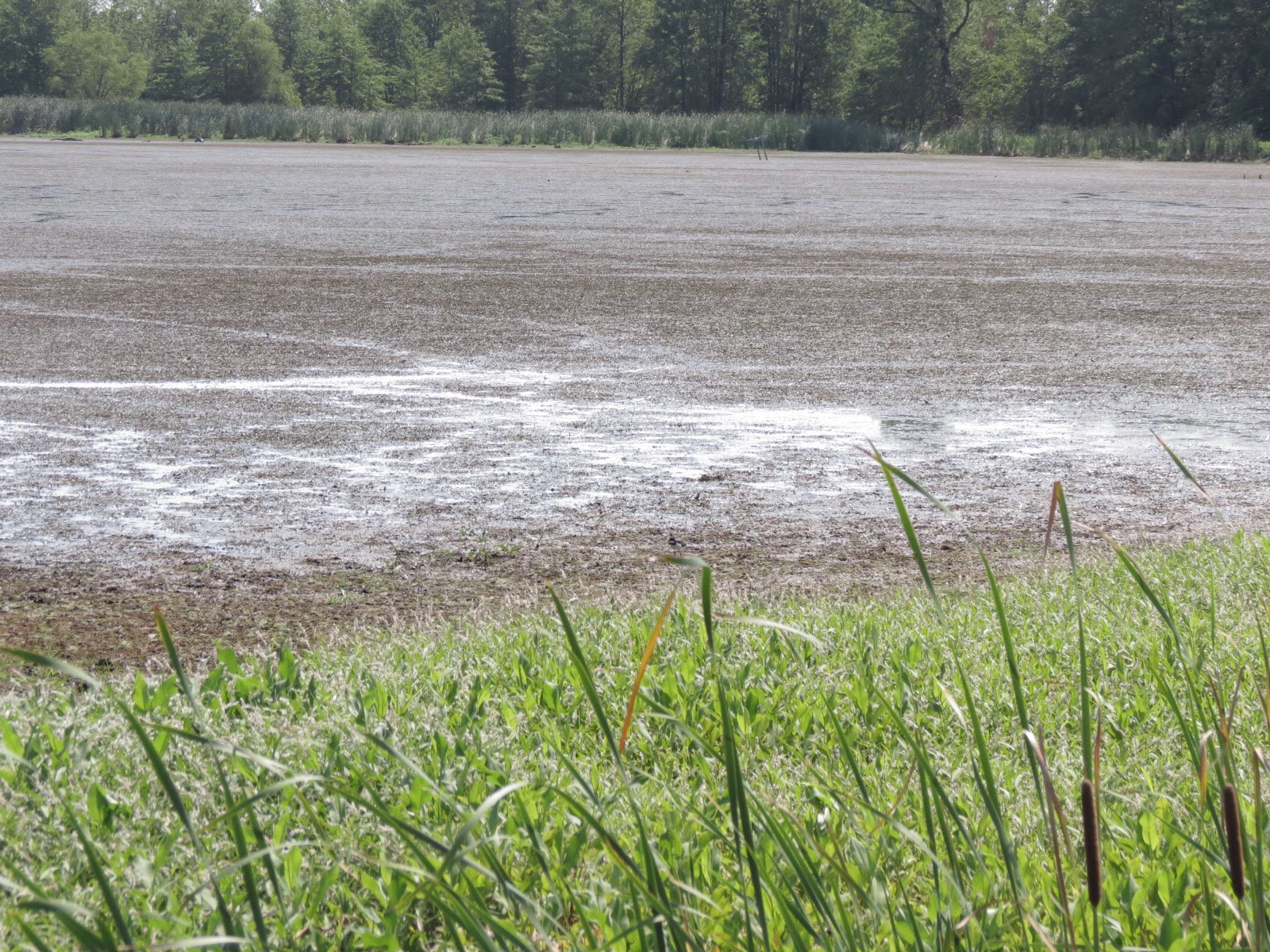
 Killdeer Plains is a designated Wildlife Area.  Not only does it offer vast expanses of grass and prairie forbs, it has a good bit of wetlands.  This makes it great for bird watching, with occasional sighting of Golden Eagles, to routine Short and Long-eared  Owls in the winter time. Now is the time to look for water fowl.

Dainty Sulphur,  Nathalis iole  
But today we were after butterflies!  Rare butterflies that are smaller than a dime, a southern species rarely seen in Ohio.  This year the Dainty Sulphurs are having a boom in their population.  One or two were seen a month ago, and now we have 20 or more flitting about the parking lot at the Sportsmen's Center.

Carpetweed,  Mollugo verticillata
This diminutive plant is the source of the "outbreak."  It is being used as host pant by the Dainty Sulphurs.  How did they ever find it?


This tiny Carpetweed, well... carpets the parking lot near the horse barn.  It would hardly catch the eye of a plant lover, but our friend Jim Davidson (butterflier extraordinaire) knew the plant was there. It has hosted Dainty Sulphurs in the past.

Dainty Sulpurs in tandem
Our Dainty Sulphurs were there all right. And they were doing what Dainty little boy and girl butterflies do.  They will soon be laying eggs in the Carpetweed, but it is doubtful they will "winter" through.  These species are southern beasties, after all.  We probably won't see them in Ohio until we have another record warm year- like next year perhaps?


And if you visit Killdeer for the butterflies, stop by the mudflats too.  Shorebird migration is in full swing and you might see some interesting species!

If you are looking for a quick sandwich and a drink, stop by Harpster, Ohio.  It is a short distance from Killdeer and my new "favorite" Ohio town.  We'll talk more of that soon.