Tuesday, October 30, 2012

Sandy's Side-effects

Here in Mid-Ohio we are seeing some of Hurricane Sandy's (now downgraded to a winter storm) side-effects.  Our temps were just cool enough to turn that rain into snow.

The first snow of the year, Oct. 30th, 2012

The view from my office window this morning.  I have seen snow pre-Halloween before, but this probably sets a record for the amount of snow.


The side yard is protected by several large pines, and this is the location I chose for my rain garden/ bird feeding stations.  I installed the rain garden when I was developing a program on wetland plants (The Soggy Bottom Boys)  for the first Mid-West Native Plant Conference.  This garden was the end result.


 I have tinkered with the water garden for several years, never happy with its look or flow.  This year I finally got it right.  It looks pretty natural to me- like a rivulet or stream in Mohican.

What do you think?

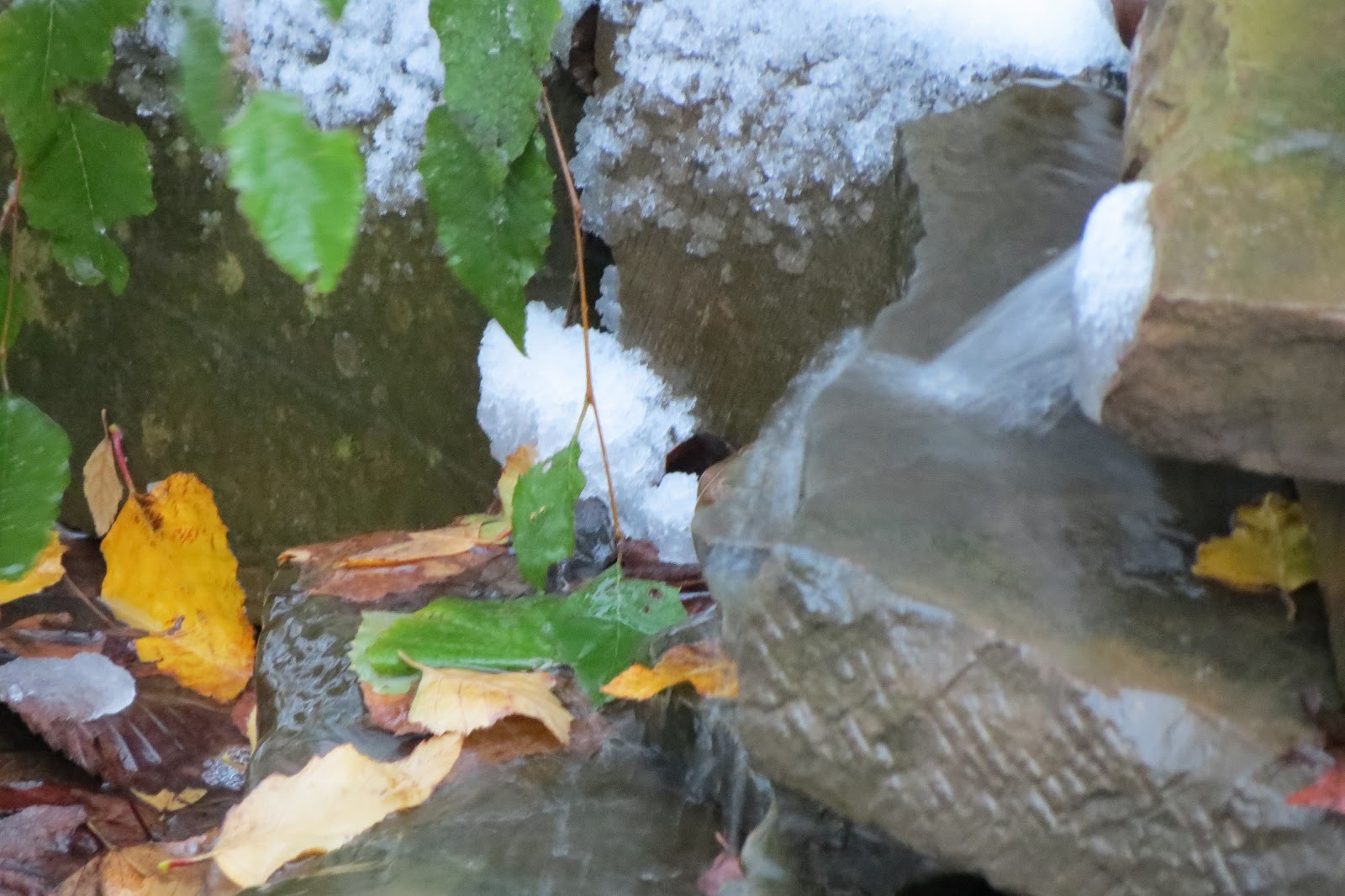
 Close up.  Water runs gently from the stones, creating a natural bathing location for the birds.

 The bird seed tray is filled with Pine Siskins this morning.  The snow doesn't bother them at all.

Hang on!  It is still mighty windy, little siskins.  The tray is rocking in the wind, but this northern visitor doesn't seem to mind.

The best part of bird feeding is the non-stop entertainment value on a winter day.  Birders get to reap the benefits of their landscape 364 days a year.  You can keep your big screen TVs, this is my "Home Entertainment System"!

Monday, October 29, 2012

Bike Aboard!

Imagine our excitement as the train comes puffing around the bend!  This is the Cuyahoga Valley National Park, one of "America's best ideas," and one of the most visited parks in the U.S.


 There is nothing like an old locomotive to get your heart pumping.

Our point of entry is the Brecksville Station. You will find plenty of maps and directions at that CVNP website.


 We have a small group of six, about to set off on an adventure- biking and a little birding, on the bike trail. Our hosts were Dave and Nancy Reinhart.  (Don't tell anyone, but they are also part-time elves on the Polar Express!)

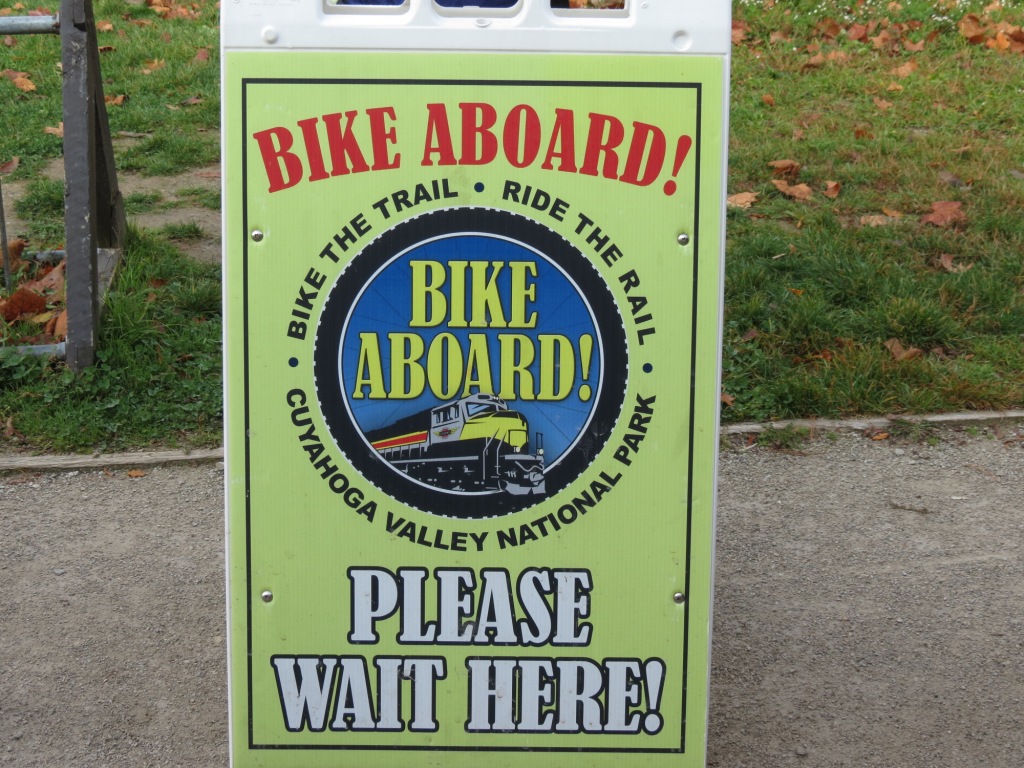
This is a well operated machine.  The train is on time, we know right where to stand, and the bikes are loaded into a cargo car as we prepare to head south on the train.

Greg Cornet visits with Nancy and Dave Reinhart during the ride.
We pass the time in the comfort of a passenger car. A short fifteen miles up the track, we disembark.  It is just far enough for a pleasant fall bike ride back to Brecksville.

If you ain't the lead bike, the scenery never changes...
 Our travels included miles of scenic canal corridors, wetlands and woods. We visited the quaint town of Peninsula, Ohio where we had lunch at a nice restaurant, The Winking Lizard. Back on the bikes afterward, to complete the last six miles of the journey.

This was an incredible trip, if were it not for some cooler misty weather, it would have been perfection!  I hope to do it again next summer, with more moderate temperatures. We could even get in a few more miles on a long day.  Either way it was great fun, and I highly recommend this trip!  Thanks to Reinharts and Cornets for inviting us along.

Thursday, October 25, 2012

Falling Leaves

The weather has been unseasonably warm, but perfect for hiking the scenic trails of Mohican State Park and Malabar Farm.  Things really get good, once you wander off-trail.

One most memorable event occurred as I  stood silently in the woods; it "rained" leaves.


 I hope you are enjoying autumn too.

Monday, October 22, 2012

Fall Form Buckeyes

Trees are not the only things changing color, and Monarchs are not the only butterflies on the move in the fall.  The Common Buckeye, Junonia coenia also has a few tricks up it sleeve... er, some interesting adaptations, so to speak.
  
The fall form of a Buckeye is a bit redder underwing,with little or no eye-spots.
Common Buckeyes also stage a migration south.  It is not as well-known, or as well documented as the Monarch movements, it's a much more subtle movement.  The butterflies who do not move south, die.  

Buckeyes are a southern species with a population that flows north with summer, and gently corrects south for the winter. It is not so dramatic as the Monarch and therefore goes largely unnoticed.


Buckeyes also shift their coloration to a darker, more subtle fall form.  The underwings are reddish and the eye spots are not nearly as visible from the underside.  Remember, these butterflies are not changing or molting like birds, this is a different population -the children of the spotted ones,  buckeyes seen in the early summer.

This form is probably an adaptation for cooler weather and leaves on the ground. Butterflies are exothermic; they must be warm to be able to fly- over 55 degrees.  In the fall they are sluggish in cool weather,  this color form blends well into the falling leaves when they are too cold to fly.

Studying nature- through the lens: shooting this buckeye butterfly.
 How do we know these things?  Photography is a wonderful way to study insects and plants.  Get close up!  Nothing is more fun than a pile of  nature photographers.

There is something very fulfilling about looking at nature up close, and the new digital cameras make this easier than ever.  I love to learn more from folks like John Howard and Jim McCormac.

In fact, I think we will offer a Flora-Quest option for just that- seeing nature through a lens!  Look for that and a summer moth/butterfly event.  We naturalists have a few tricks up our sleeves as well!


Friday, October 19, 2012

Rockbridge State Nature Preserve

Not far from the Hills of Hocking is a State Nature Preserve, located in Rockbridge, Oh.  

Follow this link for  directions and details.

Rock Bridge, a natural geological formation
 We Ohioans are prone to forget the geological and biological diversity offered right here!  No need to travel out west, just slip down to Rockbridge to see the natural wonders.

The trail head from the parking lot.
There is a grassy path leading far back into the wood to take you to the rock formations.  It is an easy mile trot, which offers some of the most spectacular birding I have witnessed, maybe ever.  This trail was literally hopping with birds!

Favorite fall fruit: Poison Ivy.
The tree row along the path was festooned in fruit, and the birds were making good use of it.  Yellow-rumped Warblers, Northern Cardinals, Tufted Titmice, and numerous other species.  All were being escorted by  Carolina Chickadees: tour guides for the migrants. 

Oft disdained, poison ivy is a native plant most beneficial for wildlife.  In the proper place, well away from the path, it is a lovely component of a natural habitat.


Feeding warblers- never give head shots.


 Fall colors splashed along this walk, goldenrods, asters, and the burgundy hues of oak leaves.  It was a study in bird-friendly native habitat and  a most pleasant walk on a fall afternoon.


Dark-eyed Junco has returned.
 Working the grass for seeds, tumbling along the path and fence row, was a most welcomed harbinger of winter.  The Dark-eyed Juncos have returned from their northern breeding grounds.

Rockbridge, conveniently located just off route 33 south-east  of Lancaster, Ohio.  Plan a fall walk soon.