Showing posts with label Fowler Woods. Show all posts

Tuesday, September 18, 2012

Service in the Preserves

 Columbus Audubon's  Katryn Renard  has been organizing service trips to Ohio Natural Areas and Preserves for many, many years.  She knows that the best trips are a combination of good works...

Katryn peeks through a tree's unusual root growth
 and having a little fun.


 Last Saturday things were looking up at Fowler Woods, just north of Mansfield.  It is a wet woods best known for its exceptional spring wildflower display.

The boardwalk, essential for access to this wet woods,  is in need of repair. Columbus Audubon was able and willing to help
.
Ryan Schroeder and Mike Grody of Natural Areas and Preserves.
 The job was laid out by the pros, Ryan and Mike.  They supplied the goods for repairs and we followed their lead.

Team Mayham strikes a pose.
The guys did some phenomenal work, but you know this is a posed photo- in real life they would never let me use the crow-bar!

Carrying the slats.
Mostly we carried the slats to the repair locations, and enjoyed the wonderful morning in the woods.

Brown (DeKay's ) Snake
Like all "big kids," we had to interact with nature a bit and admire some of the local residents. This is a DeKay's snake, a species that feeds on small insects and invertebrates in decaying logs and leaf matter.

Egg masses injected into a Viburnum stem
 Unfortunately, I found evidence of Viburnum Leaf Beetle damage and their egg masses.  We are just on the cusp of this infestation and need to be proactive now.  A good first step is to remove and destroy these egg masses.

These service trips are a wonderful example of the hard work, science, and fun that can be accomplished by a team. Our Ohio State Nature Preserves need constant maintenance and attention.  Not only to the trails and boardwalks, but as importantly- they need constant monitoring and removal of invasive species.

Invasive plants, animals and even insects can damage and ultimately  destroy these areas that were set aside for their natural beauty and unique biodiversity.  These little time capsules need to be constantly managed to prevent successional growth which would change and destroy these habitats the state deemed worthy of protecting.

If you would like to join us on a work program and have a insiders look at some of Ohio's most biodiverse habitats, join  ONAPA today.


Wednesday, April 13, 2011

First Blooms at Fowler Woods

Fowler Woods State Nature Preserve is well known for its fabulous spring ephemeral display. The earliest flower, Harbinger-of-Spring was all but spent yesterday, but the next blooms are queuing up for their annual appearance. ... Blue Cohosh, Caulophyllum thalictroides These odd purplish-brown flowers will give way to a more recognizable plant in midsummer. Blue Cohosh is named for the blue berries held roughly a foot high off the rich forest's floor. The berry is known to be toxic, and yet is has been used medicinally since the time of the Native Americans. So if it didn't kill you, I guess it just might cure you. It is still touted in many "women's" formulas today. Hmmm.... ... Mayapple, Podophyllum peltatum These early "May" flowers are now pushing through the soil, looking much like miniature beach umbrellas. Closed now, they will be opening against the sun of coming days, certain to be warmer than the 45 degrees offered of late. ... We can check back in a week when the Marsh-marigolds should be in good display. It is not-to-be-missed!

Monday, April 12, 2010

FOWL Friends in Wetlands

Now appearing in most wetlands near you: Marsh-marigold, Caltha palustris!

While many spring ephemerals have poked through the ground and are putting on their best April attire, the wetlands are simply golden. Fowler Woods in Richland County has one of the most spectacular displays of Marsh-marigolds to be found. And while pre-scouting for the Managing Wetlands for Biodiversity conference, we just had to take it in.


A member of the buttercup family (Ranunculaceae), this wetland gem creates a sea of color. Marsh-marigold can be grown in the landscape too, if you give it enough water.


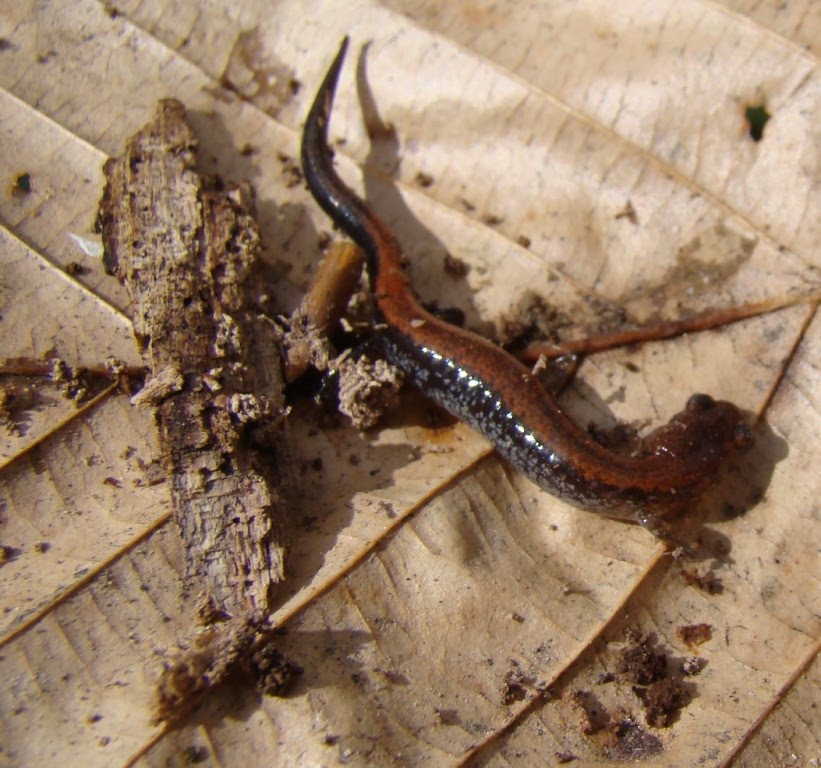
If you are looking for biodiversity, healthy wetlands are chocked full of it! Wetlands support a host of interesting species, including this Redback Salamander. Abundant and some-what common, the dark red line on its back makes this one easy to remember. However they are occasionally found unstriped, and called "lead phase." While they do not breed in vernal pools, they certainly have a predilection for these damp forested habitats.

Greg Lipps was our amphibian and salamander expert, a source of infinite knowledge of all things slimy, including gelatinous eggs. Wading deep into dark waters, he found salamander and frog egg masses in several vernal pools in Ashland county.
His program, "Small, Messy, and Diverse: Why Vernal Pools are Full of Life" got the folks reved up to investigate wetlands on our afternoon field trips.


Nothing got past this crew. The Black Forks Wetlands provided good looks at fairy shrimp and a mayfly in this small pool. Jan Kennedy, Lori Totman, Patty Saunders and Tim Mason were scanning the ditches for interesting life forms usually left unnoticed.


Not a staged photo! Hard to believe, but this candid shows how much fun naturalists can have on a sunny day, with a few friends and a water-hole.
...
Thanks to all our speakers: Greg Lipps, John Mack and Jim Bissell for opening our eyes to the fauna and flora of wetlands. Also, to the Ashland Park District volunteers and Ray Stewart of "FOWL" (Friends of Wetlands)- we couldn't have done it without you.

Thursday, March 19, 2009

Welcome: Harbinger of Spring


Erigenia bulbosa, Harbinger-of Spring is a fitting name of this minuscule plant, it truly is one of the first sprigs out of the ground. This photo, taken at Fowler Woods in the north-most corner of Richland county, shows the rather rubbery looking fern-like leaves. A member of the Parsley family, it has another common name of Salt-and-pepper.

Either way, it is one of the earliest flowers to poke through the cold, damp leaf matter remaining from last fall. A happy sight for flora starved eyes, and quite beautiful on close examination. And I do mean close. This whole plant is barely marks two inches, although they can be a bit taller.

Fowler Woods is well worth finding on your map. It belongs to the Ohio Department of Natural Areas and Preserves and has an easy to access, board-walked wet woods. Large communities of Marsh marigold, Caltha palustris and singing spring peeper frogs are certain to greet your early spring visits. There are many interesting plants to be found in this refuge, including the somewhat rare Pumpkin Ash. SHHH, don't tell the emerald ash borers. We would like to keep these!