Each year a rush of naturalists head to Shawnee State Park and Forest in Southern Ohio. It is the first blush of spring, in a magical land of forest and flowers. It was the home base of
Flora-Quest for many years.
 |
| Pinxter Azalea, Rhododendron periclymenoides |
You'll notice a sweet smell. Shawnee is home to the fragrant Pinxter Azalea, a southern specialty. Look along the steep road-side embankments where they cling for dear life.
 |
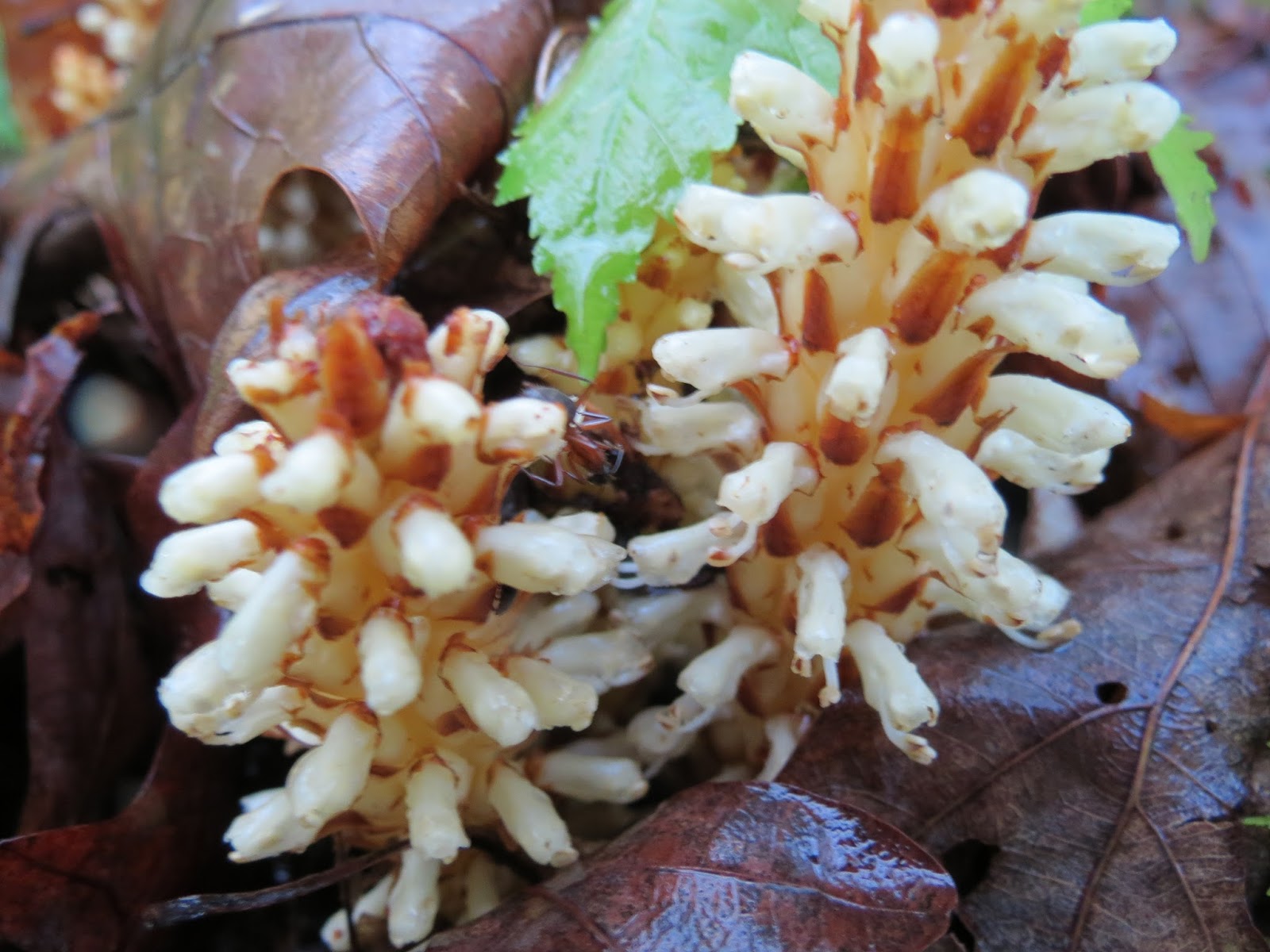
| Squawroot, Conopholis americana |
Look along the base of Oak trees for the parasitic Squawroot, some times called Cancer-root. Its sickly-white color attests to its lack of green-pigment or chlorophyll.
 |
| Yellow-breasted Chat |
Listen to wood song. This Yellow-breasted Chat performed his entire repertoire in rapid fire. He would have been a welcomed sight for any of the birders on the recent
OOS field trips which filled the lodge.
 |
| Black Huckleberry, Gaylussacia baccata |
Even the simplest of under-story shrubs has a story to tell. This is where the Newcomb's Wildflower Guides come out, and we note each detail of the low-woodland shrubs. The berries to come will provide sustenance for forest foragers.
 |
Trumpet Honeysuckle, Lonicera sempervirens
|
Look closer at the seemingly common vines. This is Trumpet Honeysuckle a rarity to Ohio. It is spreading along a forest opening created by an ice storm eleven years ago. The first time I ever visited Shawnee was on a trip to document this rare plant!
 |
| Native pollinator on the Wood Betany |
We forget the abundant pollinators in a forest. As Ohio and the nation ramps up our efforts to protect habitat for native pollinators, we destroy the habitat we already own! This forest is a buzz with pollinating bees, bumblebees, bee-flys, wasps and butterflies. It is not just the forest flowers- trees provide pollen, too!
 |
| Showy Orchis, Galearis spectabilis |
Orchis are orchids, and they grow along the road. Look closely or you will miss this beauty! Good photos must be taken from a prone position.
 |
| Woodland flowers: Crested Iris and Wild Geranium |
Shawnee park and forest are a reservoir of wildlife, both flora and fauna. Bird song and insect hum fill the air. Ohioans from far and wide travel to this far off corner of the state to revel in nature. No one looks up and wonders how many board-feet of lumber this forest would make. How much pulp wood can we send to China from our tiny 3% of Ohio's public lands?
 |
| Where have all the flowers gone? |
We should ask ourselves, "Is this the way we want our lands managed?" Do we need clear-cuts, logging roads and habitat destruction in our public forests? This is not the way Ohio managed our public lands ten years ago. Have we become so needy- or greedy- that we must sell off the last of our woods?
 |
| Why are we spring-mowing? |
More grass, fewer flowers. Ecologists note the loss of flowering forbs in constantly mowed areas. We are losing our forest flowers to grass maintenance. Certainly, road edges need to be cut in the fall to manage for woody sucessionals. But deep mowing can wait- the birds and bees need the nectar and insects the flowers bring. Let's go back to the days of a two-foot clearance mow on the edge of the forest, and leave something for the bees... and me.




 So, here is our educational sign for Bobolink protection, and there goes the mower grinding up babies on June 30th in 2010. Not a pretty sight.
 After all, what could be cuter than a baby Bobolink? You don't even have to be a birdwatcher to appreciate the bubbly calls of these gorgeous "ricebirds" from Argentina.
