Showing posts with label Wind Power. Show all posts

Thursday, March 21, 2013

Y'all come back!

Eco-tourism is simply: hospitality that pays off.

The little town of Loudonville Ohio knows how it earns a living, or at least the local McDonald's management knows.  It is all about tourism.  
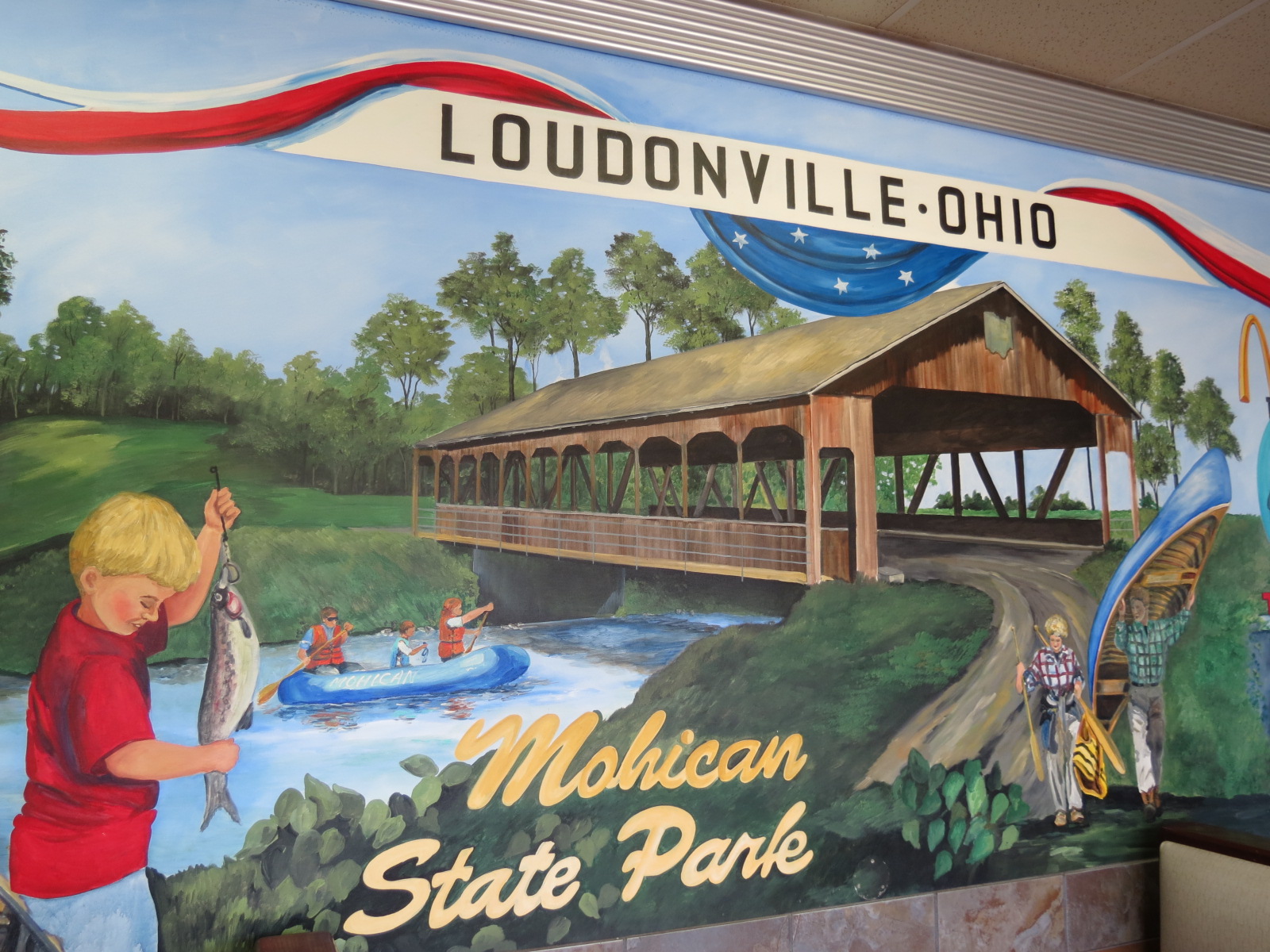
The Loudonville McDonald's displays a beautiful  mural of Mohican State Park.

  These folks are pretty savvy about marketing, and they know from whence their dollars come. Mohican State Park and Malabar Farm are huge economic draws to this area.  That tourism would sharply decline if industry is allowed to operate in our parks.  Who wants to camp or fish next to a logging operation or fracking well?  Ohio State Park land was set aside for the people of Ohio; it should not be "for sale".


The past month has been Maple Sugaring time at Malabar.  The crowds are pouring in, as the demand for homegrown food and natural products are more relevant than ever.  

     The wagon rides make it a memorable day!                                
We love Malabar and want continued protection of the land and farm management by the conservation principles Louis Bromfield promoted.  It is good for the locals and our welcomed guests alike. We are acutely aware that farm run-off is impacting our waterways and lakes.  Conservation "best practices" and conservation education should be Ohio Department of Natural Resources highest goal for this treasured farm.


Flora-Quest was started as an eco-tourism event to enlarge the constituency of the Shawnee Park and Forest. It is no secret people naturally want to protect and conserve the birds, butterflies, plants, and trees, once they understand the basic ecology.  We are now in our 7th year, and have already filled 2013's event.

Eco-tourism works!


The Biggest Week in American Birding is another excellent example of the good that can come from tourism.  People were already coming to Magee Marsh to see the spring Warblers, so why not organize the mayhem?  Now out-of -towners can get up to date information, and a myriad of trip offerings help spread the birders far and wide across Ottawa County. Ottawa County Convention and Visitors Bureau knows BWIAB is a key player in the local economy and local politicians know, too.  

Economic statistics may be the only thing preventing the full scale "bird-beater" landscape on the Erie Shores horizon.  Kim  and Kenn Kaufman have worked tirelessly to get the message  across: Wind power is great- when it is property placed. Wind power should not be placed in a migratory highway.  The science provided by Black Swamp Bird Observatory is conclusive. We know birds are migrating through the western basin of Lake Erie, both spring and fall.  First the ducks and swans,followed by millions of blackbirds, shorebirds and then neo-tropical warblers.  Migration is much more than a two week occurrence in May!  


Reason is one thing, but dollars talk.  Eco-tourism will help save the natural areas we treasure.  Help us keep our rivers clean, our forests pristine and our birds whole.  Make your voice heard about things that matter.   Ohio State Parks were set aside for the people, not for industry. Call your state representatives today.

Tuesday, December 7, 2010

The Hot Zone

There has been a bit of controversy surrounding the use of wind power and the potential collateral losses of wildlife. Are those impacts significant- or not? David Quamenn, my favorite science author, had an excellent article on Migration in the Nov. 2010 National Geographic. It featured photos of losses in terms of the bat populations. They don't even have to hit a blade to die, basically they "explode" due to negative air pressure cause by the spinning turbine.


Green cleaner energy is a good thing and I may even be persuaded to accept some collateral losses in wildlife, if I knew what numbers we could expect. I don't buy anything without asking the cost first. A few birds and bats maybe a reasonable cost....


........................................photo by Dave Lewis

Unfortunately, we won't know until we do the science. We don't have good research data on what impact wind power would have in a migratory stop-over vs. a turbine out in a mid-Ohio cornfield. I may be willing to accept some losses in Mid-Ohio- my backyard- but I sure would like to have someone tell me the "cost" before we litter this red zone with wind factories.


This map was created by Ohio Division of Wildlife and ODNR.
They spent quite a few dollars protecting Bald Eagles and nursing their numbers back from the edge of extirpation. The red or "hot" zone is where ODNR feels wind power would have extensive cost to wildlife. The orange circles- (the red zone would be littered with them) represent known Bald Eagle nests. Since they are Federally protected I would guess you agree, no one wants to see these majestic birds subjected to a obstacle course of fan blades.

So lets keep our wind power in the green- the minimum impact zone.

................................Buff-breasted Sandpiper photo by Dave Lewis
...
"Wait, wait wait..." Mr. Buff Breasted says. "Aren't you calling for a complete STOP on all wind power in the red zone?"
...
Well actually, no. We are asking for a 3 year moratorium on the three miles closest to the lake (represented by the black dotted line on the map.) BSBO and Bowling Green University both are planning studies. Give us three years to conduct these studies, and then we will know the cost.
We could be skating on thin ice. Let's check it out.

Let's get the information before we accept an irrevocable impact on our migrating birds. This moratorium is for such a tiny section of the state of Ohio, it will hardly crash our economy. Let's get the facts, and base our decisions on science. (See BSBO website for more info.)
...
I have great hopes that the two schools that have already placed wind turbines in the red zone will work with scientist to study the impact on migrating species. This could even be an awesome opportunity to work with biologists and study good science as data collectors. Maybe we can all learn something, if we only work together.

Monday, November 29, 2010

The North Coast

The Western Basin of Lake Erie is known for its Bald Eagles. The Division of Wildlife has monitored their successful nesting and enjoyed their return from the brink of extirpation in the 60's. No other bird captures the hearts of non-birders like this majestic emblem of our country.

And while visiting the Magee Marsh Sportsman's Center, we witnessed 4 fly-bys, along with this artistic rendition of a pair of Bald Eagles on a nest. The center has an amazing collection of birds and bird history from the Great Lakes.


And what makes the region so dog-gone birdy? It is perched on the intersection of not one..


... but two Fly-ways. The Atlantic and Mississippi Flyways converge here, and migration takes place from February through December each year. The north bound waterbirds start the year off, and the parade to the breeding grounds continues through early summer, when some south bound shorebirds begin their long trip back to the wintering grounds. It may be the worlds most fascinating drama- of life and death- played out each year in our "backyard."
...
And that is why we feel so strongly that wind power is a disaster-waiting-to-happen in this region.


The next time you are on the North Coast - stop in and say "Hi" to the fine folks at Magee. The Friends of Magee operate a gift shop, and the displays are a fascinating way to see birds up close.
...
And while we all love to be at Magee for the spring warblers, migration is happening most of the year on the North Coast. It is a drama you'll not want to miss.

Wednesday, November 17, 2010

Marshes and Migration

Lake Erie and the surrounding marshes are magic- and just like magic- they are disappearing before our very eyes.


Think of the incredible pressure development has put on these natural bird and wildlife sanctuaries. Cedar Point Amusement Park- home of the Blue Streak was once home of the Great Blue Heron. Condos, marinas, restaurants- all concentrated on the lake shore- have certainly made a tremendous negative impact on our wildlife.


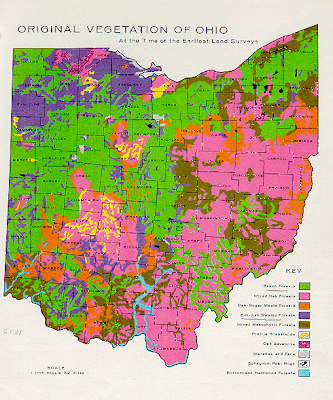
Here is the original vegetation map of Ohio- purple indicates wetlands. See the purple stuff in the Northwest corner? That was the Great Black Swamp; now only 5% of that area remains wetland. Perhaps it is due for a name change: The Little Black Swamp. Were it not for Ottawa National Wildlife and the State of Ohio's holdings, I fear our migrating birds would have no place to "fall out" during migration.

Here is a "bird's -eye-view" of the Marblehead Peninsula from the sky- (shot out of the airplane window as we were headed west on vacation)
...
Spring and fall each year, a miracle goes on above our heads. Birds migrate to and from their breeding grounds in Canada and beyond. Their only hope for continued survival is to cross that lake in hope of successful nesting. Each year hundreds of thousands of birds need to make a critical "re-fueling" stop at the wetlands along Lake Erie: Metzger Marsh, Ottawa National Wildlife Refuge, Magee Marsh, Sheldon's Marsh, and Old Woman Creek.
...
These are all critical habitats for our avian species.


And now, these birds are being handed an obstacle course to maneuver on take-offs and landing. Radio towers, buildings and a new danger- wind power.
...
The thought of greener, cleaner energy is music to any environmentalist's ears. But if wind turbines are placed at the intersection of two major migratory flyways, it is hard to believe it won't become a massive slaughter. This is not something that could happen in the future- this is happening NOW. The Black Swamp Bird Observatory needs our help to put the brakes on this wholesale disaster- before it happens.
...
  • Please sign their petition for a 3 year moritorium to study the effects on wind turbines on the birds passing through the Great Lakes. Please go here.
  • If you really want to make an impact- Send a check to BSBO to help them protect these birds.

For more information- go to the BSBO website or read Kenn Kaufman's blog post.

....

IF we do not act now, who will speak up for the birds? An ounce of prevention is worth a pound of cure- and once wind power comes- it will be too late to stop it.

* I would be ALL FOR WIND POWER as long as it is properly sited. A migratory path is NOT a proper site.